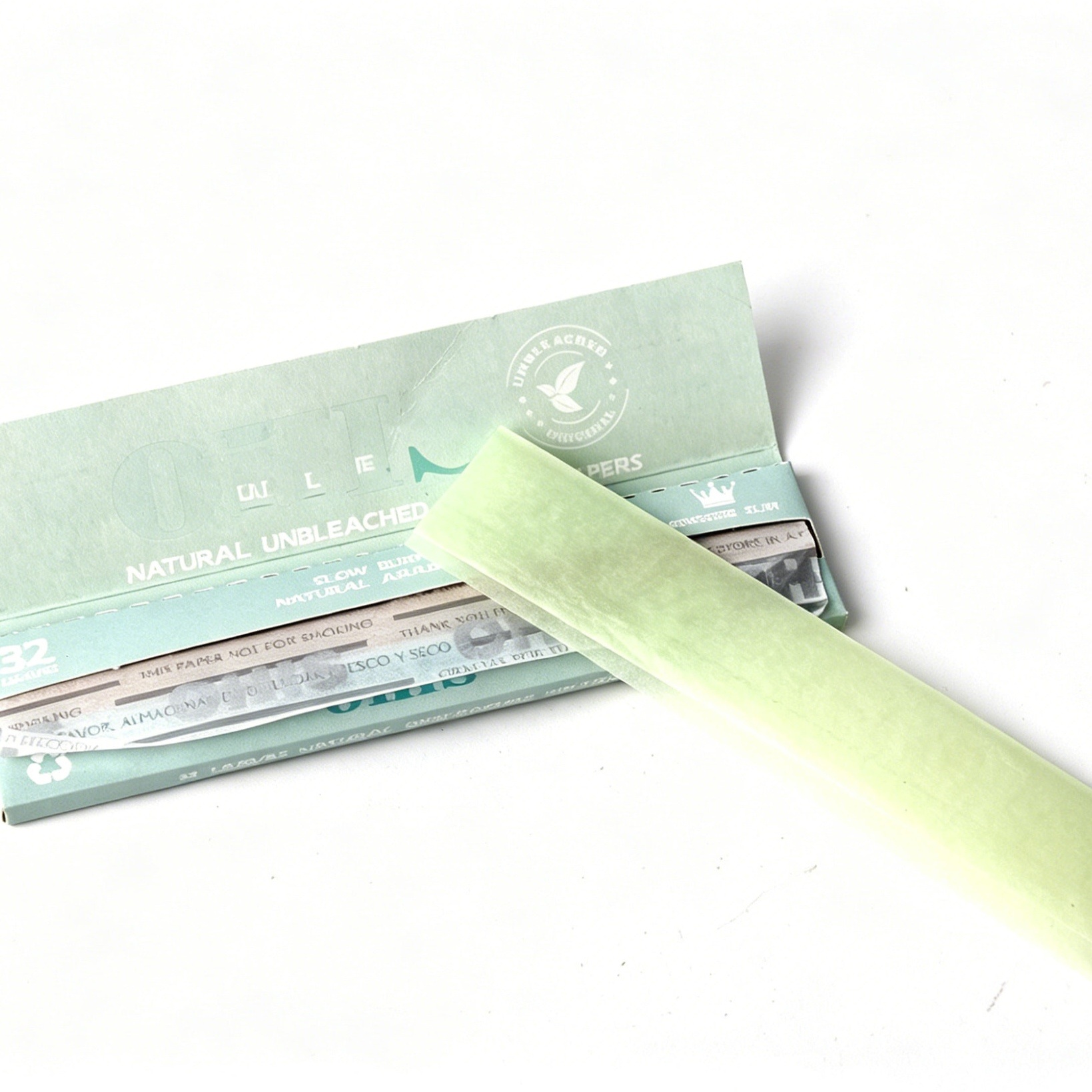
For importers, wholesalers, and private label brands in the United States, Canada, and Europe, understanding the technical specifications of rolling paper is critical to market success. One of the most vital yet often misunderstood metrics is GSM (Grams per Square Meter). This measurement of paper thickness directly determines the consumer's rolling success, the burn rate of the product, and the overall flavor profile of the smoking experience.
As a specialized OEM and ODM manufacturer, we provide this comprehensive technical breakdown to help international buyers select the optimal GSM for their target demographics and market segments.
What is GSM in Rolling Paper?
GSM stands for Grams per Square Meter. It is the standard international metric used to define the weight and density of paper. In the rolling paper industry, GSM is synonymous with thickness. While traditional office paper typically sits around 80-100 GSM, rolling papers are significantly more delicate, generally ranging from 12 GSM to 30 GSM.
The difference in even 2 or 3 GSM can completely transform how a rolling paper handles, how it interacts with humidity, and how it tastes. For a B2B buyer, choosing the right GSM is about balancing "Rollability" (ease of use) with "Smokeability" (quality of the burn).
The Four Primary GSM Categories
Understanding the market segmentation of paper weights allows distributors to cater to different skill levels and consumer preferences.
1. Ultra-Thin (12–15 GSM)
Often referred to as "Silk" or "Skin" papers, these are typically made from highly refined rice or specialized natural plant fibers.
· Target Audience: Connoisseurs and advanced rollers.
· Market Trend: High demand in premium retail stores and boutique specialty shops in the US and EU.
· Key Characteristic: They are nearly transparent and offer the least amount of paper-taste interference.
2. Thin (16–20 GSM)
This is the "Goldilocks" zone for the modern international market. Approximately 60% of experienced prefer this range.
· Target Audience: Daily users who value a slow burn but need a bit more structural integrity than ultra-thins.
· Key Characteristic: Excellent balance between transparency and tensile strength.
3. Medium (21–25 GSM)
Medium-weight papers are the traditional standard, often associated with classic wood-pulp brands.
· Target Audience: Beginners and casual users.
· Market Trend: Strong in convenience store (C-Store) channels and for promotional "giveaway" booklets.
· Key Characteristic: High tear resistance (85% better than ultra-thins), making them very forgiving for those still learning the craft.
4. Thick (26–30+ GSM)
While less common in the premium market, thick papers serve specific niche purposes.
· Target Audience: Outdoor rollers or those using high-moisture.
· Key Characteristic: Extremely easy to handle, even in windy conditions, but with a faster burn rate and more noticeable "paper" flavor.
How GSM Affects Rolling Performance
From a manufacturing perspective, the GSM determines the mechanical properties of the paper. Thinner papers (12–15 GSM) require significantly less handling pressure. In fact, they demand 50% gentler manipulation to avoid tearing.
Conversely, thicker papers (25+ GSM) can withstand up to three times more manipulation force. For an importer, this means that if your target market consists of novice rollers, a higher GSM will lead to higher customer satisfaction because they will experience fewer "failed rolls." However, for a premium brand looking to compete with top-tier global labels, staying in the 12–14 GSM range is essential for perceived quality.
The Science of the Burn: Why Thinner is Often Slower
A common misconception among consumers—and even some B2B buyers—is that thicker paper burns slower because there is "more" of it. In reality, the opposite is true.
Burn Rate Control: Ultra-thin papers (12–15 GSM) actually burn slower because they contain 50% less combustible material per square millimeter. When there is less "fuel" (paper) to feed the fire, the combustion zone remains smaller and the peak temperature stays roughly 30% lower. This results in a longer-lasting session for the end-user.
Flavor Preservation: In the competitive markets of Canada and the USA, where consumers pay a premium for high-quality botanical materials, flavor preservation is paramount. Ultra-thin papers contribute less than 5% of the total combustion byproducts. This allows the consumer to experience 95% of the intended flavor profile. Thicker papers can introduce harsh carbon that mask the delicate terpenes of the material being enjoyed.
Material and GSM Synergies
As an ODM provider, we help clients match the right material with the right weight:
· Rice Paper: Excels at ultra-thin levels (12–14 GSM). Its uniform density allows it to remain strong even when incredibly thin.
· Natural Fiber Paper: Best utilized in the 16-22 GSM range. Its natural fibers provide excellent "grip" and tear resistance, making it the most versatile material for mid-range.
· Wood Pulp: Ideally suited for 20–30 GSM. It provides a classic, nostalgic feel and is the most cost-effective option for high-volume distribution.
Manufacturing and Compliance: The B2B Advantage
When sourcing custom rolling papers, the consistency of the GSM is a sign of a high-quality factory. Cheaper manufacturers often have "hot spots" where the paper thickness varies across a single sheet, leading to uneven burns (canoeing).
Our production facility in Shenzhen uses automated precision rollers to ensure that a 12 GSM order is exactly 12 GSM from the first booklet to the last. Furthermore, we ensure that regardless of thickness, all papers remain:
· Chemical-Free: No bleach or harmful burn enhancers.
· Food-Grade Certified: Essential for legal import into the US and EU.
· Natural Arabic Gum: Sourced to provide a consistent seal across all GSM weights.
Storage and Longevity Considerations
Importers must consider the shelf-life of their inventory. GSM affects environmental sensitivity:
· Ultra-Thin Sensitivity: These papers are highly hygroscopic. If stored in high-humidity environments, they can become limp. If too dry, they become brittle. We recommend airtight packaging for 12–15 GSM products.
· Medium/Thick Durability: These are much more stable and can maintain peak performance for 2–3 years in standard warehouse conditions.
Strategic Selection for Your Brand
If you are a foreign trade businessman looking to capture market share, your selection should be strategic:
1. For High-End Private Labels: Focus on 12–14 GSM Rice. This positions your brand as a "Connoisseur" choice.
2. For Wholesale Distribution: Aim for 18–22 GSM. This covers the widest range of skill levels and ensures repeat purchases through reliability.
3. For Promotional/Event Branding: 24–26 GSM is often best. It is easy for anyone to roll at a festival or event, ensuring a positive association with your brand.
Conclusion
The difference in GSM is the difference between a mediocre product and a market-leading brand. By understanding the nuances of paper weight, tear resistance, and burn rates, importers can make data-driven decisions that align with their brand identity and customer needs.
Whether you need ultra-thin excellence or reliable medium-weight solutions, our OEM and ODM services provide the technical precision required to succeed in the US, Canadian, and European markets. We offer full customization of GSM, materials, and packaging to ensure your custom-made rolling paper stands out on every shelf.
 EN
EN