The European Union (EU) represents one of the most mature and sophisticated rolling paper accessory markets in the world. However, for regional wholesalers in nations like Germany, France, and the Netherlands, this maturity brings a significant challenge: the "commodity trap." When distributors rely solely on selling global household-name brands, they often find themselves competing in a race to the bottom on price.
This final application case of custom-made roll paper explores how a prominent German regional wholesaler escaped the "middleman" profit squeeze by launching a high-end private label brand. By partnering with a professional custom rolling paper manufacturer, they transformed their business model from a logistics provider into a high-margin brand owner.
The Strategic Landscape: Navigating the European Wholesale "Margin Squeeze"
In the DACH region (Germany, Austria, Switzerland), the retail landscape is dominated by small, high-frequency points of sale such as kiosks, and specialized shops. For years, our client—a Berlin-based wholesaler—maintained a stable business by distributing famous Spanish and French rolling paper brands.
However, as the market became more transparent and competitive, the client faced a "Margin Squeeze." Because the global brands they carried were available from multiple sources, retailers had immense leverage to demand lower wholesale prices. The client was handling all the physical labor—storage, sales, and logistics—but capturing very little of the brand equity. They realized that to secure their future, they needed a product they could control: a product with the quality of a market leader but the profitability of a direct-factory partnership.
The Problem: The Need for Market Independence
The client’s challenge was twofold. First, they had to convince their existing retail network that a "new" brand could perform as well as the established names. Second, they needed to ensure that the product was specifically tailored to the unique preferences of the European "connoisseur" palate.
Generic, "one-size-fits-all" products would not suffice. They needed a custom rolling paper supplier that could provide:
1. Technical Innovation: A paper blend that outperformed the competition.
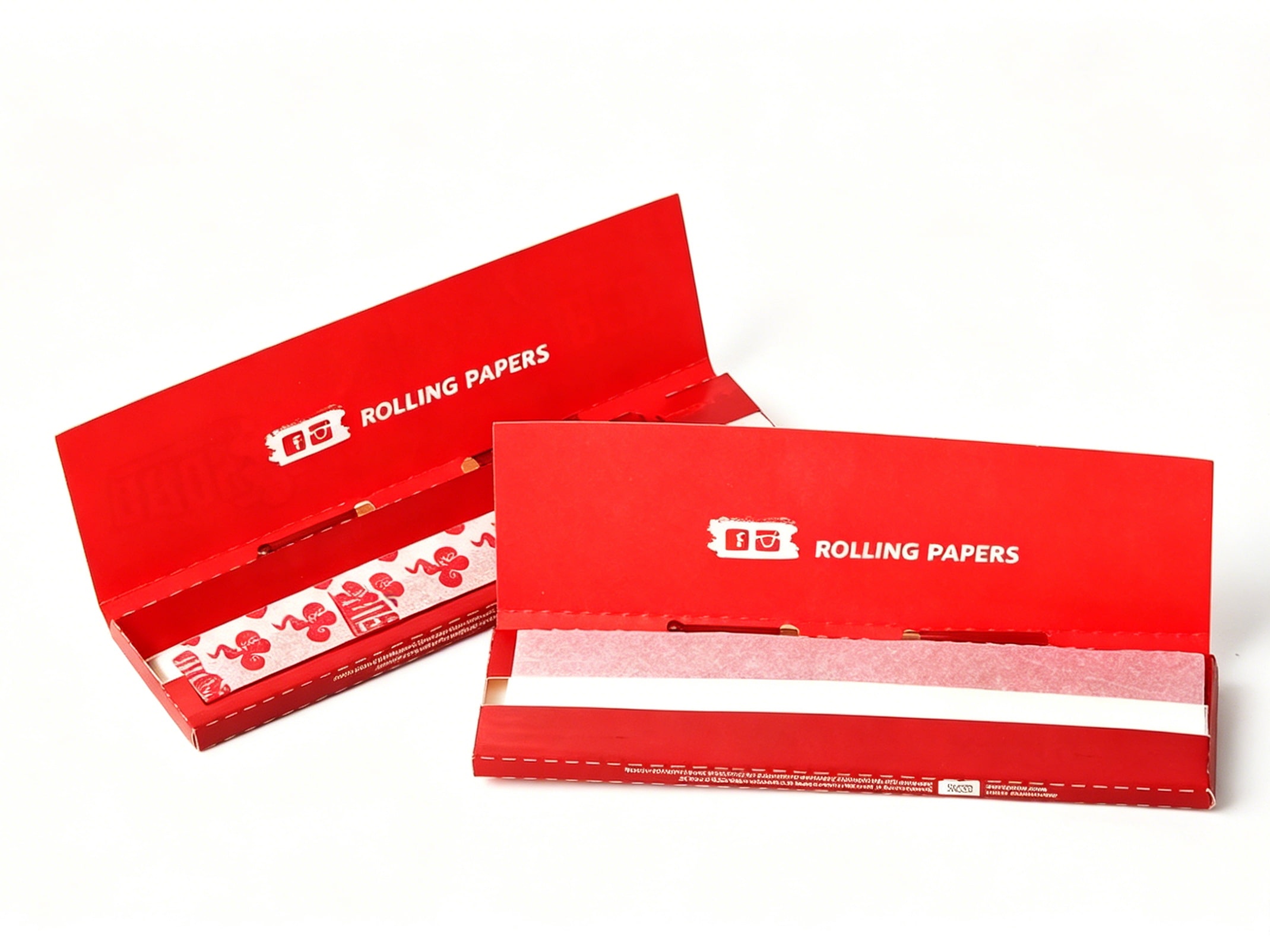
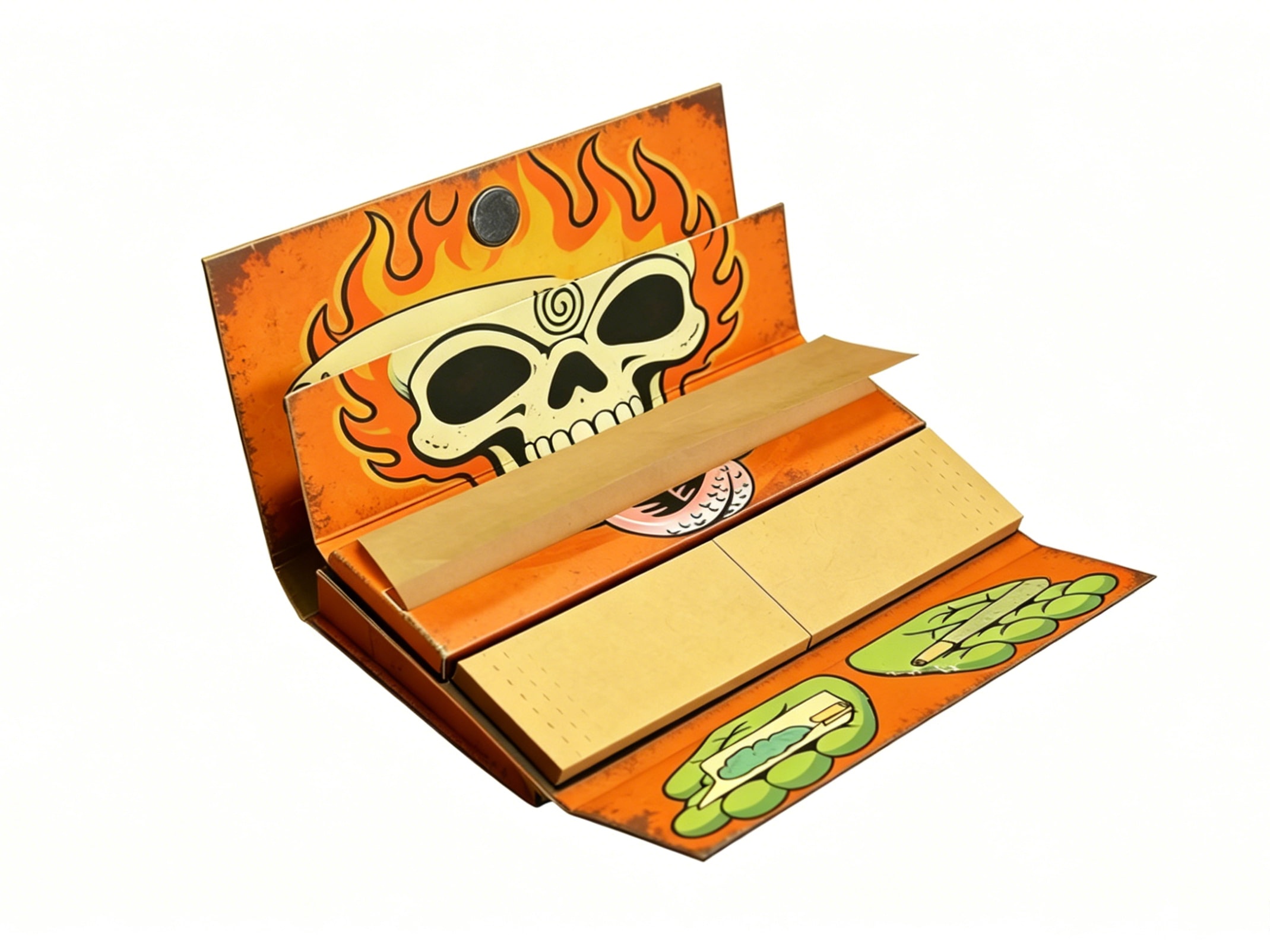
2. Retail-Centric Design: Packaging that optimized limited shelf space.
3. Regulatory Compliance: Full adherence to the complex TPD (Rolling Paper Products Directive) and local German labeling laws.
The Professional Solution: Engineering a "Local" Premium Brand
We embarked on a collaborative journey to engineer a private-label line that felt uniquely "German" in its precision and "European" in its rolling paper quality.
1. The "European Blend" Paper: Rice and Flax Innovation
European are known for their preference for "slow-burning" and "clean" experiences. While 100% rice papers are popular, many consumers find them slippery and difficult to roll manually. We developed a custom 12.5 GSM rice and flax fiber blend. This hybrid material offers the ultra-thin transparency of rice paper but incorporates the natural "grip" and texture of flax. The result was a paper that burned with almost zero ash and provided a superior tactile experience—a critical selling point for the "connoisseur" market.
2. Retail-First Design: The "Berlin-Industrial" Aesthetic
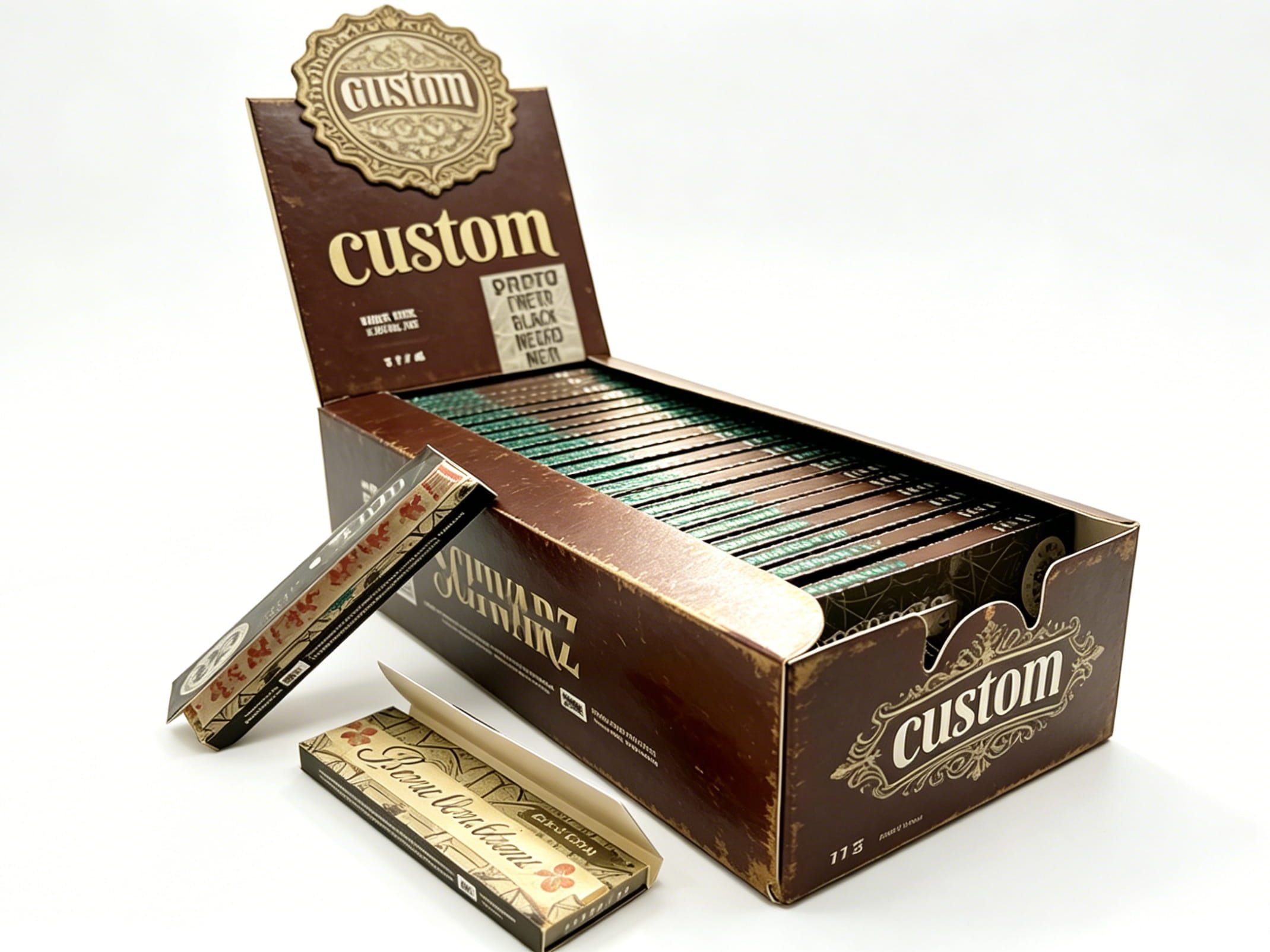
In European cities, retail counter space is extremely expensive and limited. We designed custom POS (Point of Sale) display boxes that were vertical and slim-profile. This allowed retailers to stock the new brand in tight spaces where traditional horizontal boxes wouldn't fit.
The aesthetic was a departure from the colorful, cluttered designs of legacy brands. We utilized a "Berlin-Industrial" theme—matte black packaging with silver foil stamping and minimalist typography. This premium look immediately signaled to the consumer that this was a high-end alternative to the "standard" brands.
3. Regulatory Excellence: DACH Region Compliance
Sourcing from a wholesale rolling paper manufacturer outside of Europe can often lead to compliance headaches. We handled the "heavy lifting" by ensuring every booklet was TPD-compliant. This included multi-language legal warnings (German, French, and Italian) and ensuring that all materials—from the natural Arabic gum to the soy-based inks—met the rigorous safety standards required for the German market.
Manufacturing and Scalability: The Foundation of Wholesale Trust
For a large-scale wholesaler, a stockout or a drop in quality is a disaster. To support this client’s growth, we utilized our state-of-the-art automated manufacturing facility in Shenzhen.
Our production lines feature:
· Laser-Guided Gumming: Utilizing sensors to ensure the natural Arabic gum line is applied with micron-level precision, preventing "gum-skipping" that leads to unsealable papers.
· Automated Folding and Creasing: Ensuring that every sheet is perfectly aligned, which is essential for the smooth operation of automatic rolling machines used by many consumers.
· Scalable Output: We implemented a production schedule that allowed the client to scale from an initial market-test order of 50,000 booklets to a monthly recurring order of 500,000 units without any deviation in material quality or lead time.
Results and ROI Analysis: From Middleman to Market Leader
The transition to a private label brand was the most successful strategic move in the wholesaler's 20-year history. Within just 24 months, the results were undeniable:
· Market Dominance: The private brand became the #1 selling SKU in the client’s catalog, surpassing the legacy brands they had previously relied upon.
· Increased Profitability: By removing the "brand-name markup" and sourcing directly from our factory, the client was able to offer retailers a 20% better price than the leading competitors while simultaneously increasing their own net profit by over 40% per unit.
· Brand Equity: The wholesaler is no longer just a delivery service. They now own a valuable intellectual property (IP) that has a loyal following in Berlin and beyond. This "market independence" has made their business significantly more resilient to price wars.
Conclusion: Restructuring the B2B Financial Model
This case study proves that for B2B buyers in the United States, Canada, and Europe, private label rolling paper is not just a product—it is a growth engine. It allows wholesalers to take control of their margins, their branding, and their future.
If you are a distributor looking to escape the "generic brand" trap, our team is ready to act as your manufacturing butler. We provide the technical innovation, design expertise, and regulatory support needed to build a brand that can compete with—and beat—the global industry leaders. In the European trade zone, market independence begins with a custom solution.
 EN
EN